
Palak Jain
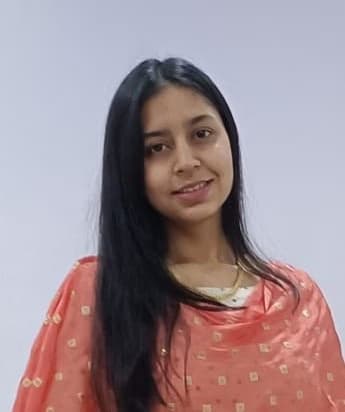
My aim is to help students not just score well, but also think & relate concepts to realworld science, and develop strong problemsolving skills.
Loading...


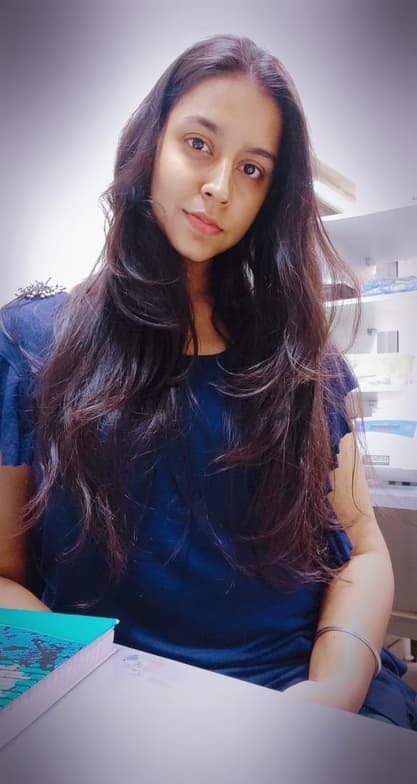
Show all photos
Palak Jain
Masters degree
Enroll after the free trial
Each lesson is 55 min
50 lessons
20% off
/ lesson
30 lessons
15% off
/ lesson
20 lessons
10% off
/ lesson
10 lessons
5% off
/ lesson
5 lessons
-
/ lesson
1 lessons
-
/ lesson
Palak Your chemistry tutor
I am a passionate and experienced educator in the field of biology, with a special focus on Biology and Chemistry. Over the years, I’ve helped many students not only master the subject matter but also develop a deep curiosity for how life works and how we are surrounded with chemicals around. My teaching style is concept-driven, student-friendly, and interactive. I believe that understanding "why" something happens in biology and chemistry is just as important as knowing "what" happens. I often use diagrams, analogies, and real-life examples to make complex topics easy to understand and remember. Whether you're aiming for top grades, preparing for competitive exams, or just trying to get more comfortable with biology and chemistry , I’m here to support you every step of the way with structured lessons, clear explanations, and a positive learning environment. Let’s make science exciting and achievable together!
Specialities of your chemistry tutor

Homework help

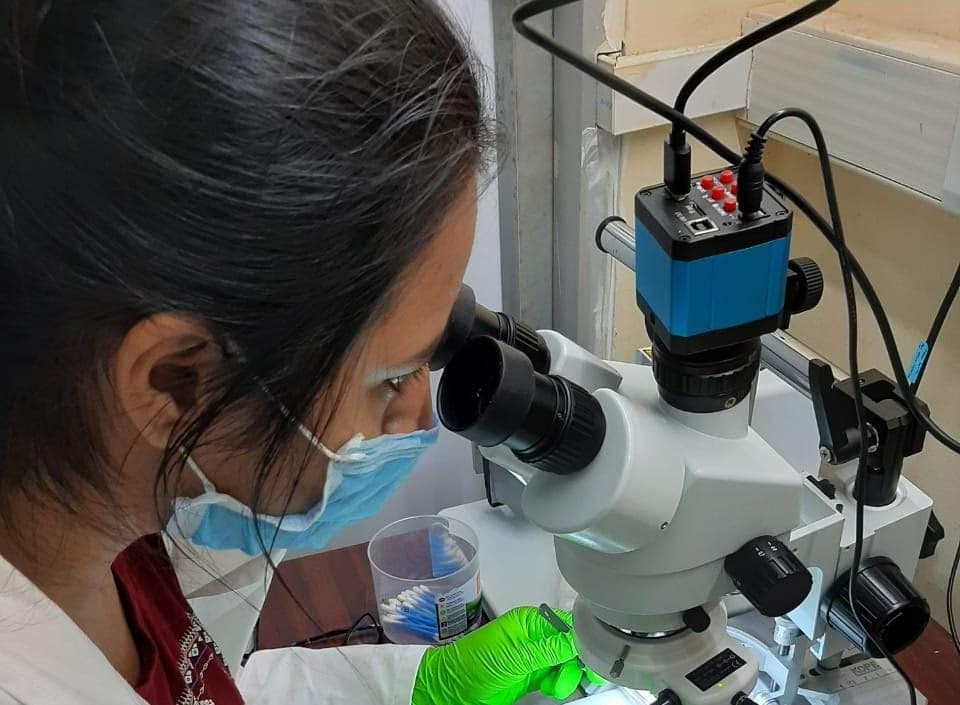
Chemistry experiments

Visual learning

International Baccalaureate (IB)

Provincial-specific curriculum (CA)
Review sessions

A-Levels (UK)

Common Core State Standards - CCSS (USA)

Next Generation Science Standards - NGSS (USA)
Test prep strategies
Personalized learning plans

New Zealand Curriculum - NZC (NZ)
Types of learners for chemistry class

High School students
Middle School students

ASD

Learning Disabilities

Anxiety or Stress Disorders

Home schooled

ADHD
Elementary School students
Chemistry class overview
a Biochemistry teacher, my primary goal is to make the subject logical, relatable, and deeply understandable for every student. I believe that biochemistry is not just a collection of reactions and pathways, but the chemistry of life itself—and I strive to teach it as such. My approach begins with building conceptual clarity by explaining the “why” behind each process before moving into the “how.” I use visual tools like pathway maps, flowcharts, and annotated diagrams to simplify complex topics such as glycolysis, enzyme kinetics, and DNA replication. I incorporate real-life analogies and clinical examples—like enzyme deficiencies or metabolic disorders—to connect textbook knowledge to practical applications. Problem-solving is taught step-by-step, with a focus on understanding rather than memorization, especially in numerically heavy areas like buffer systems and kinetics. I tailor my teaching to student levels, simplifying for beginners and enriching content for advanced learners with research-based insights. By integrating biology and chemistry, encouraging active questioning, and using exam-focused practice, I ensure students not only perform well academically but also develop a genuine appreciation for the subject. My aim is to nurture curiosity, critical thinking, and confidence in every learner.

Homework help with quick turnaround
Students receive chemistry assignment support within 24 hours, ensuring they stay on top of their studies.

Trusted by 95% of Parents
Parents report noticeable academic improvement in chemistry within months of tutoring.

Proven exam success rates
Students excel in chemistry tests and exams, achieving better scores thanks to focused tutoring.
Your chemistry tutor also teaches
Biochemistry
States of Matter
Flexible Scheduling
Allows 1h early scheduling
Allows 1h early rescheduling
Can wait for 20 mins after joining

.svg)
10 day Refund
.svg)
Free Tutor Swap

Chemistry concepts taught by Palak
The Tutor and Student reviewed the processes of transcription and translation. They discussed the enzymes involved in transcription, promoter regions, termination mechanisms, and post-transcriptional modifications. The genetic code, ribosome function, tRNA roles, and protein folding and targeting were also covered. The class concluded with a plan to review notes and potentially work on practice questions for these topics.
Post-Transcriptional Modification in Eukaryotes
Transcription: The Process
Translation: mRNA to Protein
Protein Folding and Destination
The session covered introductory concepts of molecular biology, including the structure and packaging of DNA, gene definition, and the composition of DNA and RNA. The Tutor guided the Student through the initial stages of DNA replication, focusing on key enzymes and the process of strand separation and primer synthesis. The next class will continue with transcription and translation.
DNA Structure and Packaging
DNA Replication Enzymes and Process
RNA Structure and Function in Replication
Purines and Pyrimidines
The student and tutor worked through problems related to dihybrid crosses in genetics, focusing on constructing Punnett squares, determining phenotypic and genotypic ratios, and calculating probabilities of specific offspring traits. They practiced identifying dominant and recessive alleles and their combinations, confirming the 9:3:3:1 phenotypic ratio and exploring variations in crosses.
Dihybrid Cross Basics
Punnett Square Construction for Dihybrid Crosses
Phenotypic Ratios in Dihybrid Crosses
Genotypic Ratios in Dihybrid Crosses
The Tutor and Student reviewed key concepts in Geology, including plate tectonics, mineral formation, and mineral properties. They discussed different types of plate boundaries, the origin of ores like banded iron formations, and various characteristics used to identify minerals such as hardness and cleavage. The next steps involve the student providing further details for future review sessions.
Mineral Properties: Identification and Classification
Minerals: Ores and Formation
Plate Tectonics: Types of Boundaries
The tutor and student reviewed and practiced genetics concepts including monohybrid crosses, chromosomal disorders (Down, Turner, Klinefelter syndromes), and Mendel's laws of segregation and independent assortment. They worked through practice problems and discussed scheduling for future sessions, with a plan to cover dihybrid crosses and other genetic concepts.
Chromosomal Disorders
Law of Segregation
Law of Independent Assortment
Test Cross
The Tutor and Student reviewed non-Mendelian genetics, including concepts like incomplete dominance, pleiotropy, epistasis, and sex-linked inheritance with a focus on hemophilia. They then practiced solving genetics problems through multiple-choice questions, reinforcing concepts such as independent assortment and test crosses. The next session is scheduled for Friday.
Non-Mendelian Inheritance
Environmental Influence on Phenotype
Sex-Linked Inheritance
Linkage and Crossing Over
Mitochondrial Inheritance
Tools & techniques used by chemistry tutor
Video conferencing
Digital Note taking

Flashcards

Practice worksheets

Quizzes

Assessments

Digital whiteboard
Interactive chemistry lessons

Record lessons

Chat for quick help

Weekend lessons

Open Q&A

Pets are welcomed

Chemistry tutors on Wiingy are vetted for quality
Every tutor is interviewed and selected for subject expertise and teaching skill.