
Robert Motter
Engage with a Chemistry Expert from West Chester University for Interactive Learning Journeys.
Loading...


Show all photos
Robert Motter
Bachelors degree
Enroll after the free trial
Each lesson is 55 min
50 lessons
20% off
/ lesson
30 lessons
15% off
/ lesson
20 lessons
10% off
/ lesson
10 lessons
5% off
/ lesson
5 lessons
-
/ lesson
1 lessons
-
/ lesson
Robert Your chemistry tutor
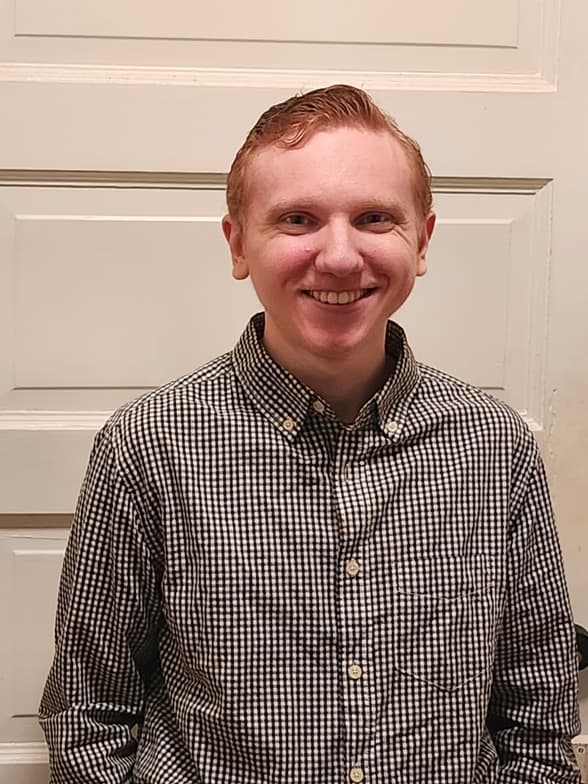
I'm Robert Motter, a Bachelors-educated tutor with over a year of experience specializing in Chemistry for college students. My passion lies in guiding students through complex topics like Inorganic Chemistry, Atomic Structure, and more. I excel in creating personalized learning plans, conducting engaging Chemistry experiments, and honing essential lab skills. With me, you'll dive deep into Chemical Bonding, explore Acids, Bases & pH intricacies, and grasp the finer points of Organic Chemistry. From real-world applications to effective test prep strategies, my review sessions are tailored to boost your understanding. Let's embark on this Chemistry journey together for a brighter academic future!
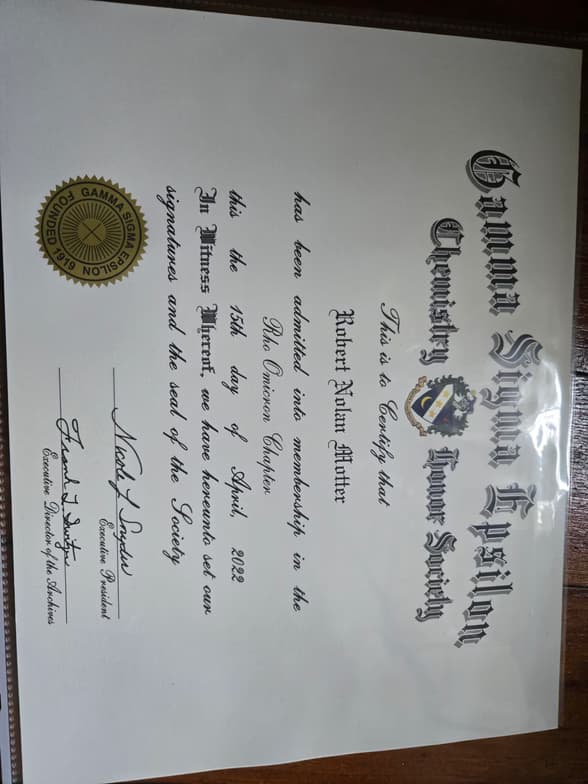
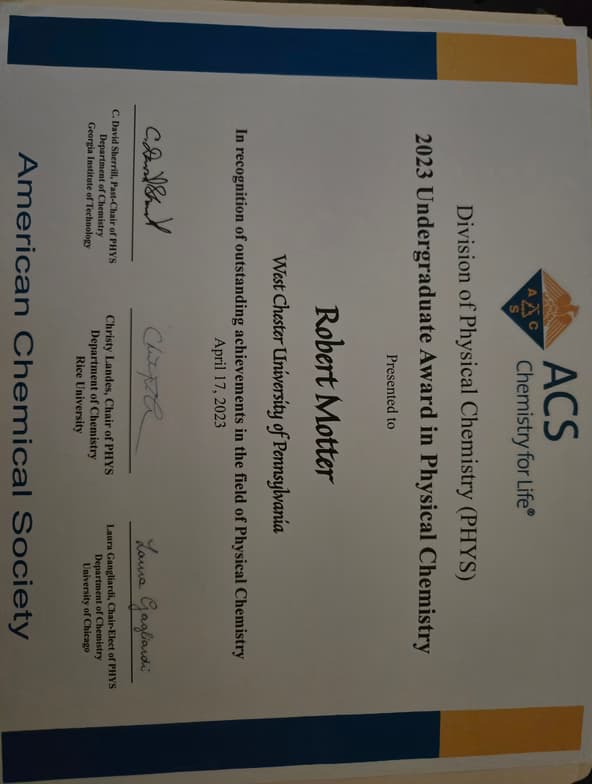
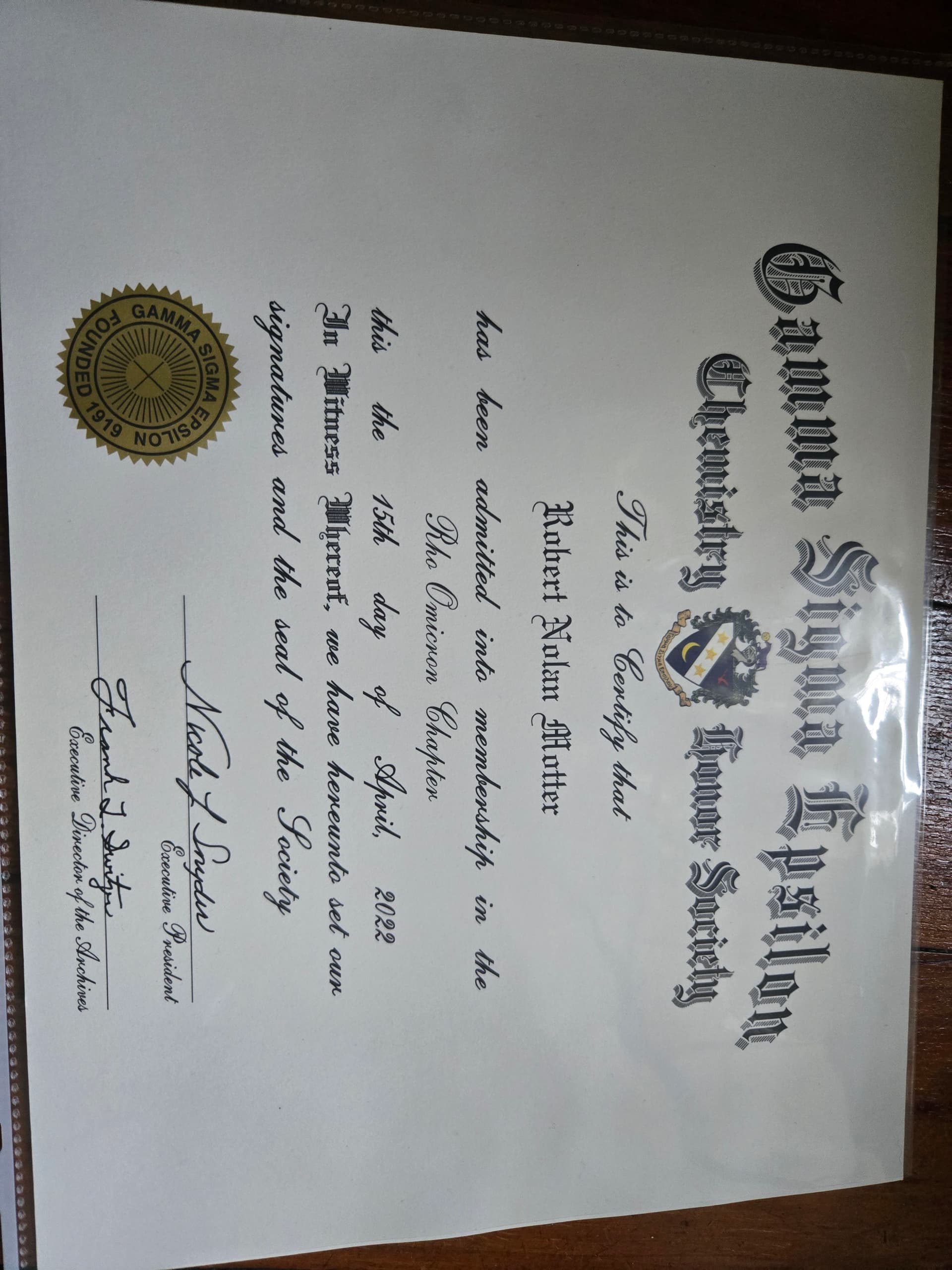
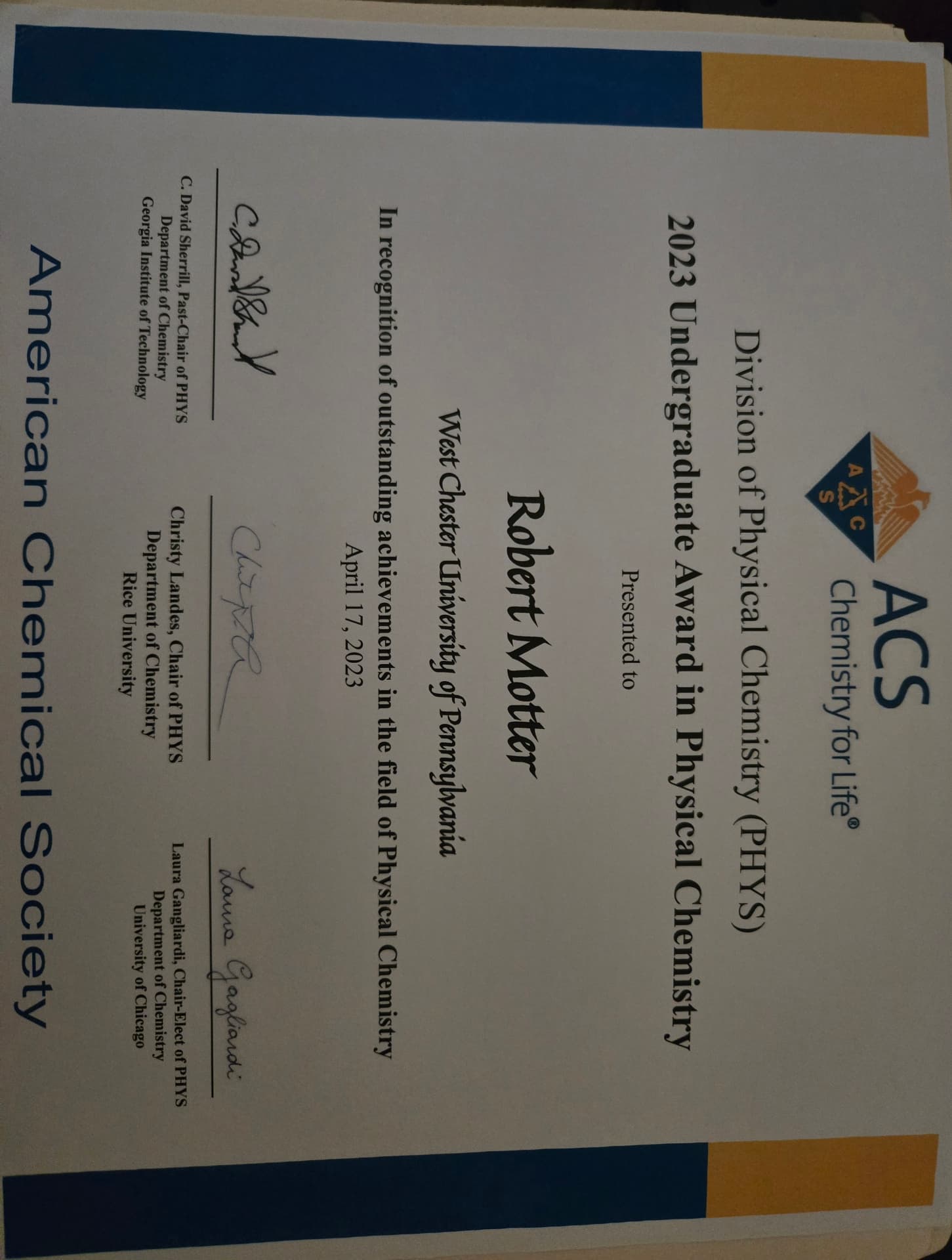
Robert graduated from West Chester University
Specialities of your chemistry tutor

Personalized learning plans
Career guidance
Review sessions
Test prep strategies

Chemistry experiments
Types of learners for chemistry class

ADHD

Learning Disabilities

College students

Anxiety or Stress Disorders

ASD

Home schooled
Chemistry class overview
My personalized tutoring approach blends structured, visual learning with patience and interactive techniques to engage college-level students in subjects like Atomic Structure, Chemical Bonding, and more. By leveraging tech tools such as digital whiteboards, interactive 3D models, and video conferencing, I create interactive lessons that cater to diverse learning styles. I follow renowned curricula like A-Levels (UK) and AP Program (USA), ensuring a comprehensive educational experience. With a focus on concept clarity and tailored guidance, I empower students to excel in challenging topics through practice worksheets, quizzes, and digital note-taking, fostering a deep understanding for academic success.
Your chemistry tutor also teaches

Organic Chemistry
Chemical Reactions
Atomic Structure
Chemical Bonding
Acids, Bases & pH
States of Matter
Flexible Scheduling
Allows 1h early scheduling
Allows 1h early rescheduling
Can wait for 20 mins after joining

.svg)
10 day Refund
.svg)
Free Tutor Swap

Chemistry concepts taught by Robert
The Tutor and Student reviewed carboxylic acid derivatives, their structures, reactivity order, and common reactions such as nucleophilic acyl substitution, hydrolysis, reduction, and Grignard reactions. They discussed strategies for organizing this information, like creating a web of reactions, to prepare for an upcoming exam.
Key Reactions of Carboxylic Acid Derivatives
Leaving Group Ability and Reactivity Trends
Nucleophilic Acyl Substitution Mechanism
Carboxylic Acid Derivatives: Structure and Reactivity
The student and tutor reviewed advanced organic chemistry reactions, including enolate chemistry, protecting group strategies, direct alkylation using LDA, and multi-step synthesis conversions from nitriles to aldehydes. They worked through reaction mechanisms and problem-solving strategies, with plans to continue reviewing mechanisms in future sessions before an upcoming exam.
Resonance Stabilization of Enolates
Protecting Groups for Carbonyls
Alpha-Halogenation of Carbonyls
Grignard Reagents and Carbonyls
LDA as a Strong
Non-nucleophilic Base
Hydrolysis of Nitriles to Carboxylic Acids
Conversion of Carboxylic Acids to Aldehydes
The Tutor and Student worked through problems related to the Diels-Alder reaction, focusing on identifying dienes and dienophiles and predicting the stereochemical outcome of the cycloaddition. They practiced analyzing the stereochemistry of reactants and products and discussed the influence of substituents on reactivity. The next session is planned for sometime next week.
Diels-Alder Reaction Basics
Identifying Dienes and Dienophiles
Stereochemical Outcomes and Rotations
Partial Charges and Reactivity
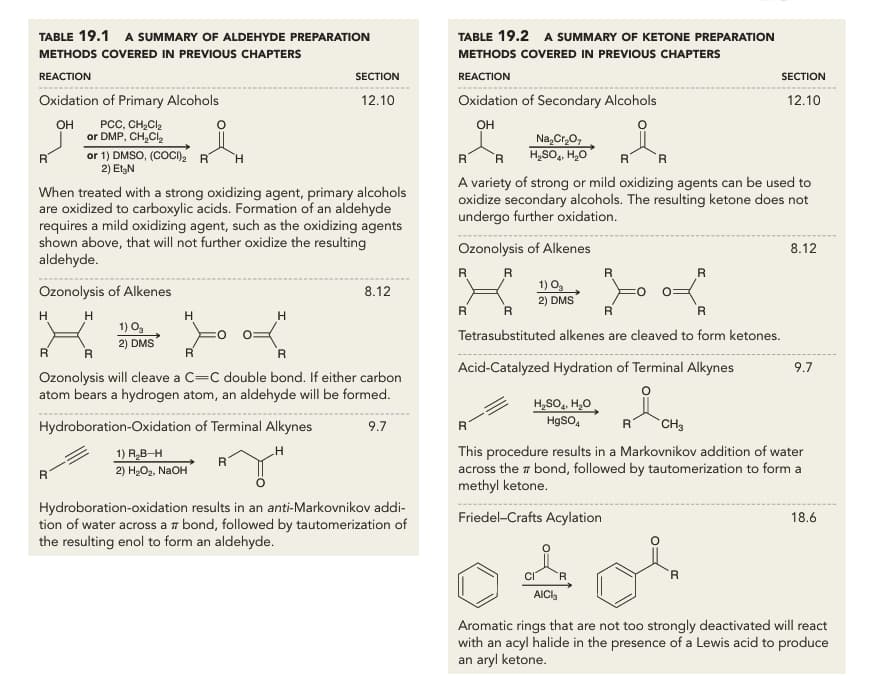
The student and tutor worked through a variety of organic chemistry reactions involving aldehydes and ketones. They practiced drawing detailed reaction mechanisms for acetal formation, imine/enamine synthesis, and the deprotection of carbonyl groups. The tutor reviewed the concepts and the student worked on applying them to specific problems.
Protecting Groups in Organic Synthesis
Acetal and Hemiacetal Formation
Imine and Enamine Formation
Nucleophilic Addition Reactions of Carbonyls
Wittig Reaction
The Tutor and Student worked through various problems involving spectroscopy (IR, Mass Spectrometry, NMR), chemical kinetics, and acidity prediction. They practiced interpreting spectral data to deduce molecular structures and applying principles of reaction mechanisms and equilibria. The session also included a review of upcoming exam topics.
Factors Affecting Acidity (ARIO Principle)
Reaction Kinetics and Rate-Determining Step
Proton Nuclear Magnetic Resonance (¹H NMR) Signals
Degrees of Unsaturation (DoU)
Mass Spectrometry (MS) for Structure Elucidation
Interpreting Infrared (IR) Spectroscopy
The Student and Tutor reviewed various organic chemistry concepts, including nomenclature, reaction mechanisms (Wittig, Cannizzaro, enamine formation), synthesis reactions, carbohydrate chemistry (chain extension, Fischer projections, ring formation), and stereochemistry. They practiced identifying reactions, predicting products, and drawing mechanisms, with a plan to focus on practice problems for the upcoming exam.
Wittig Reaction Limitations
Enamine Formation Requirements
Canizzaro Reaction Conditions
Acetal Hydrolysis
Fischer Projections and Chirality
Tools & techniques used by chemistry tutor
Video conferencing

Digital whiteboard

Flashcards
Interactive diagrams

Assessments
Interactive chemistry lessons

Parent feedback

Pets are welcomed

Weekend lessons

Note taking

Chemistry tutors on Wiingy are vetted for quality
Every tutor is interviewed and selected for subject expertise and teaching skill.