
Lipika Lipika
Engage in interactive real-life based phenomena learning to start learning with fun.
Loading...



Show all photos
Lipika Lipika
Bachelors degree
Enroll after the free trial
Each lesson is 55 min
50 lessons
20% off
/ lesson
30 lessons
15% off
/ lesson
20 lessons
10% off
/ lesson
10 lessons
5% off
/ lesson
5 lessons
-
/ lesson
1 lessons
-
/ lesson
Your biology tutor - Lipika
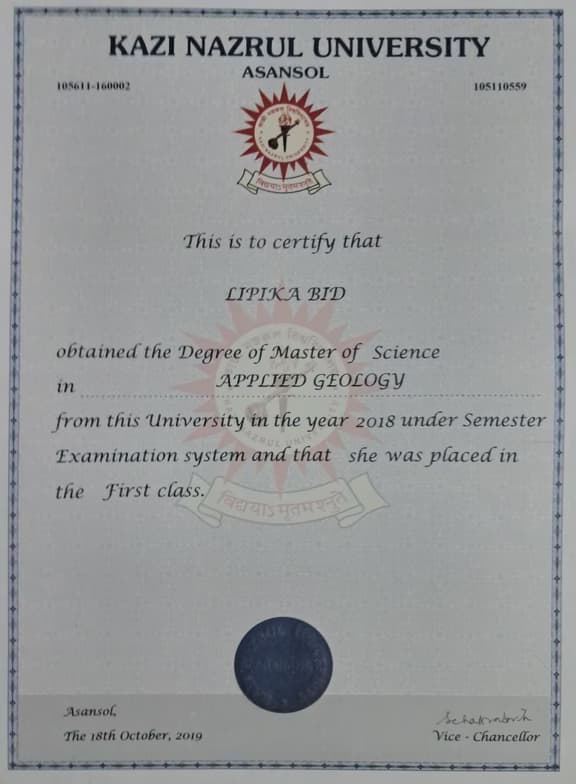
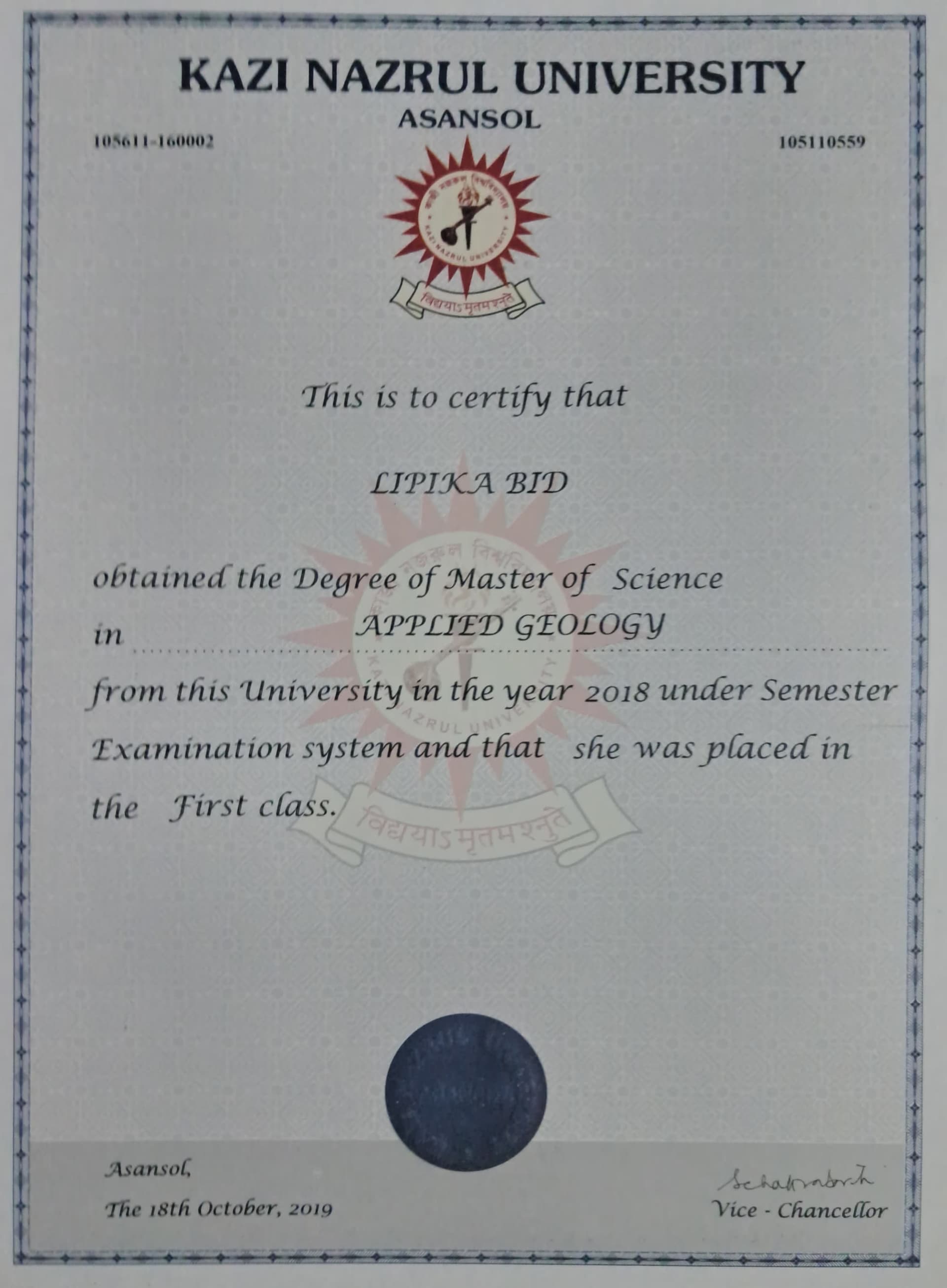
I'm Lipika, completed my Master's degree in Science. I have been teaching both online and offline for more than 6 years, working with students from India, USA, Canada & Australia. I have authored high school books for NGSS standard curriculum. I was working as an Academic Head for an ed-tech unicorn previously. I teach all science subjects till grade 10 and Physics, chemistry & geology till grade 12. I have tutored 300+ students. I love interacting with students and exposing them to the world of different possibilities. Hence, I take up different curriculum and spread knowledge. I prefer teaching on a blank page because I feel there is a scope to take students to a world of possibilities from blank to a vast diversity of knowledge. I use a simple blank page and use different colors for the demarcation of different things. Usually, the structure of the class includes recalling the topics of the previous class, introducing a new topic, solving problems from the topic, and ending the class after completing the topic with a summary of the class. I try correlating everything to the realistic world, and it helps students to understand the topic better. The practical use of the topics is very important, and I try to provide a glimpse of the use of the topic of discussion in practical life as well. I also help my students with their assignments, homework, and test preparation. I always take regular feedback from my students and parents and also give my feedback on the students performance, so that the tutoring sessions are effective for the learner.
Lipika graduated from The University of Burdwan
Academic expertise of your biology tutor

Australian Curriculum (AU)

Career guidance

State-Specific Standards (USA)
Test prep strategies

Common Core State Standards - CCSS (USA)
Visual learning

Next Generation Science Standards - NGSS (USA)

Advanced Placement (AP) Program (USA)

Provincial-specific curriculum (CA)
Types of students for biology class

Middle School students
Elementary School students

Anxiety or Stress Disorders

Home schooled
High School students
Biology class overview
I prefer teaching on a blank page because I feel there is a scope to take students to a world of possibilities from blank to a vast diversity of knowledge. I use a simple blank page and use different colors for the demarcation of different things. Usually, the structure of the class includes recalling the topics of the previous class, introducing a new topic, solving problems from the topic, and ending the class after completing the topic with a summary of the class. I try correlating everything to the realistic world, and it helps students to understand the topic better. The practical use of the topics is very important, and I try to provide a glimpse of the use of the topic of discussion in practical life as well. I also help my students with their assignments, homework, and test preparation. I always take regular feedback from my students and parents and also give my feedback on the students performance, so that the tutoring sessions are effective for the learner.
Your biology tutor also teaches
Biology
Botany
Cell biology
Genetics
Microbiology
Zoology
Flexible Scheduling
Allows 1h early scheduling
Allows 1h early rescheduling
Can wait for 20 mins after joining

.svg)
10 day Refund
.svg)
Free Tutor Swap

Biology concepts taught by Lipika
The Tutor and Student continued their study of gas laws, practicing problems related to effusion rates, gas density, and molar mass calculations using Graham's Law and the ideal gas law. They also began exploring stoichiometric calculations involving gases. The Tutor assigned the student to re-work a specific problem for follow-up.
Stoichiometric Mole Ratios
Molar Mass Calculations
Ideal Gas Law (PV=nRT)
Graham's Law of Effusion
The tutor and student reviewed the first law of thermodynamics, focusing on energy conservation, internal energy, heat, and work. They practiced applying these concepts through problem-solving, including calculations for different thermodynamic processes like isothermal and adiabatic expansions. The student was advised to work through provided worksheets and existing tutorial questions to solidify their understanding.
First Law of Thermodynamics
Work Done in Thermodynamics (PΔV)
Adiabatic Processes
Isothermal Processes and Boyle's Law
The Student and Tutor reviewed DNA recombination technology, protein synthesis including the central dogma and the TATA box, and various aspects of genetics like RNA roles, mutations, and Mendelian inheritance. They practiced solving multiple-choice questions related to these topics to prepare for an upcoming test.
Vectors in Genetic Engineering
TATA Box
Selectable Markers
DNA Ligase
DNA Recombinant Technology
The student and tutor reviewed Graham's Law of Diffusion and Effusion, practicing problems that calculate relative rates of effusion, determine unknown molar masses, and find gas velocities based on molar masses. They planned to continue with similar problems, potentially covering more complex scenarios next time.
Graham's Law of Effusion/Diffusion
Algebraic Manipulation in Gas Law Problems
Molar Mass and Gas Velocity
The Student and Tutor reviewed concepts in genetics and cell biology, focusing on chromosomal mutations, cell division, and molecular processes like DNA replication and protein synthesis. They also applied principles of Mendelian genetics and evolution to solve problems, and discussed biotechnology techniques.
Chromosomal Mutations
Cell Cycle and Mitosis
DNA and Protein Synthesis
Genetic Variation and Evolution
The Student and Tutor reviewed types of mutations, DNA replication, and the roles of mRNA and tRNA in protein synthesis. They also covered genetic engineering techniques, including the use of gene probes, restriction enzymes, and viral vectors. The session ended with a discussion of CRISPR technology and its potential applications, along with a practice problem to calculate the number of amino acids from a nucleotide sequence.
Point Mutations
Frameshift Mutations
DNA Replication in Eukaryotes
Environmental Factors and DNA Mutations
Germ vs. Somatic Cell Mutations
Molecular Tools: Gene and DNA Probes
RNA's Role in Protein Synthesis
Teaching tools used by biology tutor
Video conferencing

Digital whiteboard

Assessments

Practice worksheets
Digital Note taking
Hands-on biology lessons

Record lessons

Chat for quick help

Mobile joining

Parent feedback

Note taking

Biology tutors on Wiingy are vetted for quality
Every tutor is interviewed and selected for subject expertise and teaching skill.