
Jay Kaushik
Expert Physics Tutor | 8+ Years Experience Teaching IB, IGCSE, ICSE, CBSE & UAE Boards | PhD Physics Researcher | Mastering Concepts from Basic
Loading...


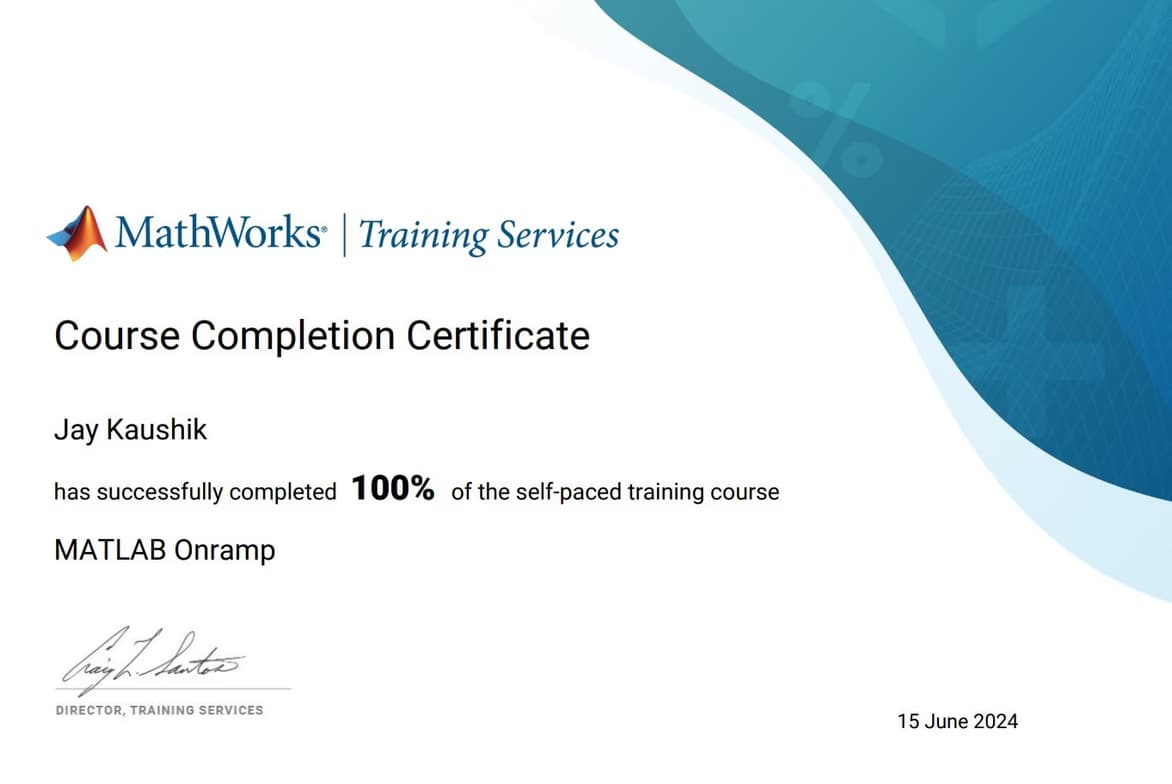

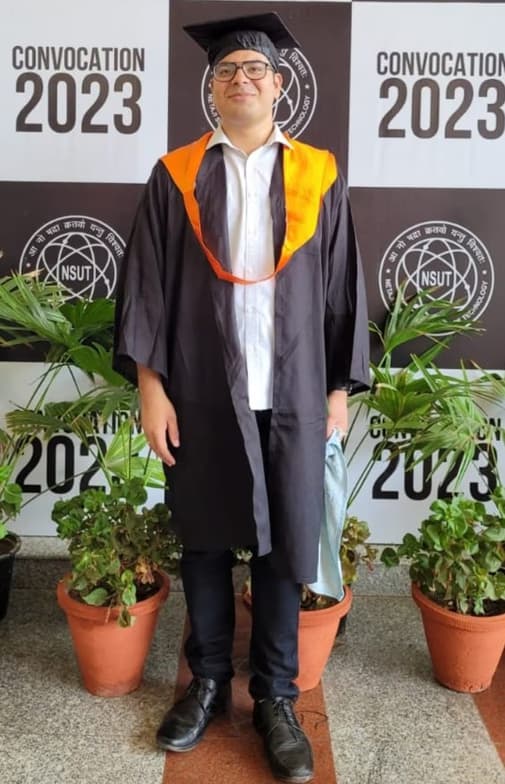
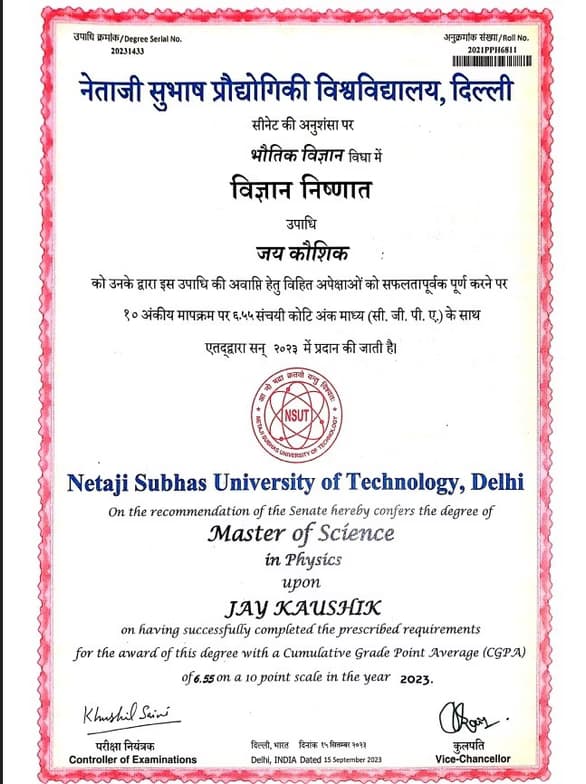
Show all photos
Jay Kaushik
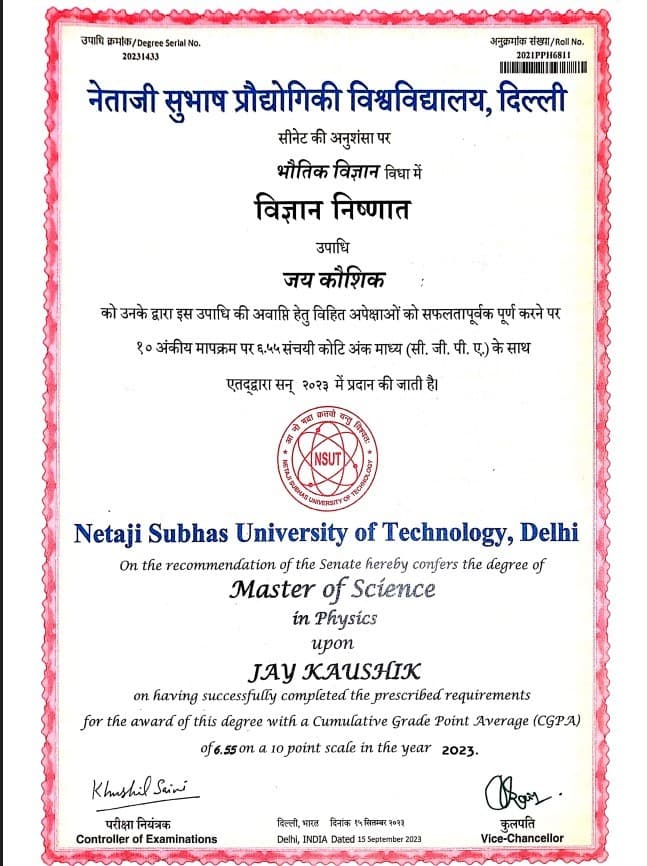
Masters degree
Enroll after the free trial
Each lesson is 55 min
50 lessons
20% off
/ lesson
30 lessons
15% off
/ lesson
20 lessons
10% off
/ lesson
10 lessons
5% off
/ lesson
5 lessons
-
/ lesson
1 lessons
-
/ lesson
Jay - your physics tutor
With over 8 years of teaching experience and a strong academic background, including my PhD research in physics, I am Jay Kaushik—your dedicated physics tutor for high school, middle school, college, elementary levels, and competitive exams. I have taught students from India and abroad, covering major international and national boards such as IB, IGCSE, ICSE, CBSE, and UAE curricula, along with JEE–NEET Physics. Specializing in subjects like quantum mechanics, electromagnetism, and astrophysics, I follow a unique teaching methodology: starting from the very basics and gradually progressing to advanced concepts, ensuring every student builds a strong conceptual foundation. My approach emphasizes clarity, real-world applications, structured problem-solving, and personalized learning plans tailored to each student’s pace. From hands-on physics demonstrations to exam strategies and long-term academic guidance, I am committed to making physics intuitive, logical, and enjoyable. Let’s explore the fascinating world of physics together!
Meet Jay
Jay graduated from NSUT ( Netaji Shubas University of Technology )
Academic expertise of your physics tutor

Personalized learning plans
Career guidance

Homework help

Next Generation Science Standards - NGSS (USA)

A-Levels (UK)

GCSE (UK)
Visual learning

Provincial-specific curriculum (CA)

International Baccalaureate (IB)

Advanced Placement (AP) Program (USA)
Real world application
Physics lab skills
Student types for physics class

Home schooled

High School students

ASD

ADHD

Learning Disabilities
Middle School students
Elementary School students
College students

Anxiety or Stress Disorders
Physics class snapshot
My teaching style is built on clarity, interaction, and strong conceptual learning. With over 8 years of experience teaching students across IB, IGCSE, ICSE, CBSE, UAE Boards, and competitive exams, I focus on taking every student from the basics to advanced concepts with complete confidence. I break down complex physics ideas into simple, intuitive steps that help students build a solid foundation before moving to higher-level problem-solving. I teach a wide range of subjects—including Mechanics, Atomic Physics, Quantum Mechanics, Electromagnetism, and more—using real-life examples, visual demonstrations, and structured explanations. To enhance engagement, I use modern tools such as interactive whiteboards, simulations, digital notes, and live problem-solving sessions. My curriculum is well-planned, systematic, and fully aligned with academic standards for international and national boards. Having taught over 100+ students from Elementary to College levels, I tailor each lesson to individual learning styles, ensuring clear understanding, strong analytical skills, and long-term retention. My goal is simple: make Physics easy, logical, and enjoyable while empowering students to excel academically with a deeply rooted conceptual foundation.
Jay - Physics tutor also teaches
Nuclear Physics
Physics
Thermodynamics
Electromagnetism
Quantum Mechanics
Atomic Physics
Flexible Scheduling
Allows 1h early scheduling
Allows 1h early rescheduling
Can wait for 20 mins after joining

.svg)
10 day Refund
.svg)
Free Tutor Swap

Physics concepts taught by Jay
The tutor introduced the t-test for two independent samples, covering its theoretical basis, hypothesis formulation, and computational procedures. They explained how to calculate t-statistics and standard errors, distinguishing between equal and unequal sample sizes and introducing the concept of pooled variance. The session also outlined the steps for hypothesis testing and the difference between one-tailed and two-tailed tests. The tutor planned to cover more formulas and potentially the Hartley F-max test in the next, mathematically intensive session.
Calculating T-Statistics and Standard Error
Hypothesis Testing Steps
Independent vs. Within-Subjects Designs
Independent Measures T-Test
The tutor introduced fundamental trigonometric concepts using right-angled triangles, defining perpendicular, base, and hypotenuse. The session covered the definitions and calculations of sine, cosine, and tangent, as well as the identities tan(A) = sin(A)/cos(A) and sin²(A) + cos²(A) = 1, with practical examples and problem-solving to reinforce understanding.
Right-Angled Triangles in Trigonometry
The Pythagorean Identity
Relationship Between Tangent
Sine
and Cosine
Basic Trigonometric Ratios (SOH CAH TOA)
The session covered Chapter 9, focusing on t-statistics for hypothesis testing when population standard deviation is unknown, and introducing methods for measuring effect size like Cohen's D and R-squared. The Tutor and Student also discussed confidence intervals as a way to estimate population parameters and reviewed the upcoming study plan for Chapters 10 and 11.
T-Statistics
Measuring Effect Size (Cohen's D)
Percentage of Variance (R²)
Confidence Intervals
The tutor introduced t-statistics as a method for hypothesis testing when the population standard deviation is unknown. They reviewed necessary statistical concepts and guided the student through the steps of performing a t-test, including calculating the t-statistic and determining the critical region. The next session is planned for more practice with t-tests.
T-Statistic: The Solution for Unknown Sigma
Hypothesis Testing with T-Statistics: The Four Steps
T-Distribution vs. Z-Distribution
Degrees of Freedom (DF)
The Tutor and Student concluded Chapter 8 of a Statistics course, covering directional hypothesis tests, effect size (Cohen's d), and statistical power. They practiced calculating z-scores and interpreting results in the context of hypothesis testing. The Tutor planned to share additional practice questions for the Student to solve before the next session.
One-Tailed vs. Two-Tailed Hypothesis Tests
Effect Size (Cohen's d)
Statistical Power
The tutor and student reviewed statistical concepts related to hypothesis testing, including the steps involved, types of hypotheses, and decision-making processes. They also discussed potential errors in hypothesis testing (Type I and Type II) and factors that influence test outcomes, such as sample size and variability. The tutor planned to cover remaining topics in the chapter and continue with subsequent chapters.
Hypothesis Testing: The Four Steps
Type I and Type II Errors in Hypothesis Testing
Factors Influencing Hypothesis Testing Outcomes
Classroom tools used by physics tutor
Interactive diagrams

Assessments

Practice worksheets

Digital whiteboard
Interactive 3D models
Digital Note taking
Engaging physics lessons

Parent feedback

Record lessons

Weekend lessons

Open Q&A

Mobile joining

Physics tutors on Wiingy are vetted for quality
Every tutor is interviewed and selected for subject expertise and teaching skill.